Company & engagement
Pages 4–7
 COMPANY PROFILE 2026
Alphadot X helps organisations connect technology, people and everyday operations.

South African built. Established in 2016.
Company profile | 2026
COMPANY PROFILE 2026A digital platform creates value when it fits the processes, responsibilities and people around it.

Organisations need dependable information, visible work and clear accountability. Yet records can be scattered, approvals can stall and operational teams can lose time reconstructing what happened. Technology needs to address those realities, alongside the people who will use it.
Alphadot X brings specialist platforms, implementation services, consulting and business process outsourcing together around the organisation’s priorities. We help define the scope, prepare information, configure workflows and support the move into everyday operation.
Our approach connects the platform with the work behind it: the record being captured, the service request being resolved, the employee review being completed or the asset being verified. Responsibilities and reviewable outputs give each engagement a practical foundation.
Platforms. Specialist software for distinct operating needs.
Implementation. Configuration, migration, integration and adoption.
Managed operations. Consultants and operational teams supporting agreed processes.
COMPANY PROFILE 2026Explore our company, service model, delivery approach and the Lupin ecosystem.
Start with the company and the challenges we address. The managed-operations chapter then explains the work Alphadot can undertake through consultants and operational teams, using the relevant platform and agreed client procedures.
The delivery chapter shows how an engagement moves from discovery into configuration, data preparation, validation, training and handover. Product chapters connect each platform to the responsibilities of the people using it.
The closing chapters bring the ecosystem together through illustrative connected journeys, industry applications, governance requirements and ways to engage our team. Detailed product demonstrations remain available in the dedicated Lupin brochures.
Pages 4–7
Pages 8–17
Pages 18–26
Pages 27–38
Pages 39–42
COMPANY PROFILE 2026Founded in 2016 by Tebogo Madileng, Alphadot X combines creative, business and technical thinking.
Our journey began in branding, marketing and digital development and expanded into enterprise technology and organisational transformation. That experience informs a practical interest in how people understand and use the systems supporting their work.
Today, Alphadot X provides reseller, consulting, implementation and managed-operation services across the Lupin product ecosystem, alongside custom software and digital services. Lupin Technologies is the product OEM and owner of the Lupin software platforms.
As a 100% Black-owned, B-BBEE Level 1 contributor, Alphadot X brings local understanding to government, public entities and private businesses. Each engagement is shaped around its operating environment, information needs, people and delivery responsibilities.
Established. 2016
Leadership. Tebogo Madileng, Founder & CEO
Base. Pretoria, South Africa
Identity. 100% Black-owned | B-BBEE Level 1
COMPANY PROFILE 2026Paper files, shared folders, spreadsheets and isolated applications can obscure the responsibilities behind a process.
The problem is often the handover. A document reaches the wrong reviewer. A service request has no clear owner. An employee’s performance evidence is disconnected from their agreement. An asset’s location differs from its register entry.
These gaps create repeated work and make it harder to answer straightforward management questions: what is outstanding, who needs to act, which record is authoritative and what evidence supports the decision?
We begin by understanding those questions in the client’s environment. Platform selection follows the process assessment, while configuration, data preparation, training and operating responsibilities form part of the agreed solution.
Find the right record and its context.
Know who owns the next action.
Follow work and exceptions through their stages.
Retain the information supporting a decision.
COMPANY PROFILE 2026A clear relationship between product ownership and client-facing implementation.
Lupin Technologies develops and owns the Lupin platforms. The product ecosystem covers documents and records, people and performance, service operations, cemetery administration, asset management and connectivity billing.
Alphadot X helps clients select, implement, integrate and operate the agreed solutions. Our consultants translate business requirements into a practical delivery scope, while the engagement defines migration, training, support and operational services.
Product-level changes and escalation are coordinated with Lupin Technologies where required. Customer process owners retain the policy decisions, approval authority and acceptance responsibilities appropriate to their institution. This division keeps software ownership, service delivery and client accountability understandable.
Lupin Technologies: platform development and product responsibilities.
Alphadot X: consulting, delivery and contracted operations.
Process ownership, policy decisions and acceptance.
COMPANY PROFILE 2026An engagement can begin with a platform, a project, a specialist consultant or an operational workload.
Some clients need a focused implementation. Others need help cleaning records, digitising a backlog, conducting physical verification or preparing a process for a new system. A further group needs ongoing people and services to administer the work after deployment.
Alphadot X can combine these requirements in a scoped engagement. Software, implementation, professional services and ongoing operations are defined clearly so the client understands what is included and who is accountable for each output.
Discovery establishes the starting point: the users, sites, records, transactions, existing systems and operating constraints. The resulting proposal identifies deliverables, dependencies, acceptance criteria and the model for support or managed operations.
Solution assessment and selected product scope.
Implementation, migration and integration.
Specialists for defined responsibilities and outputs.
Ongoing administration and agreed operational work.
COMPANY PROFILE 2026BPO and managed operations connect Lupin capabilities to the day-to-day processes a client needs handled.

We offer consultant-led and operational services across the Lupin ecosystem. The scope may include records administration, HR processes, GRC support, asset verification, service-desk activity, cemetery administration or subscriber and billing operations.
The engagement defines the workload rather than relying on a broad promise to manage everything. It specifies the process, inputs, staff responsibilities, access rights, quality checks, reporting and client approvals that make the service workable.
Teams can work on site, remotely or through a hybrid arrangement. The platform helps retain the relationship between an operational task, its owner and the evidence of the work performed. Regular reviews address exceptions, changing demand and improvement opportunities.
Workload. Define volumes, frequency, complexity and outputs.
People. Assign consultants and operational responsibilities.
Controls. Agree access, review, approvals and escalation.
Reporting. Make the service and outstanding work visible.
COMPANY PROFILE 2026Our consulting offer connects domain knowledge with configuration, practical processes and delivery support.
Alphadot X provides consultants for the responsibilities within its service scope. These can include records and document management, human resources, performance administration, GRC and internal-audit support, assets, service operations and cemetery administration.
Technical and delivery responsibilities can include business analysis, solution design, application development, migration, integration, testing, user training and change support. The engagement selects the skills needed for its agreed outputs.
Specialist authority and client approvals are defined before work begins. Financial policy decisions, statutory conclusions, risk acceptance and formal audit sign-off remain with the appropriately authorised client or appointed professional. Consulting support supplies the administration, evidence and work needed for review.
Process assessment, records, people and operational administration.
Configuration, interfaces, migration and validation.
Training, operational transition and ongoing improvement.
COMPANY PROFILE 2026On-site, remote and hybrid arrangements allow the engagement to fit its information, location and coordination needs.
On-site delivery supports work tied to physical records, local teams or assets in the field. Consultants and operational staff work within the client environment under agreed access, supervision and quality procedures.
Remote delivery supports administrative processes that can be carried out through approved platform access. The scope defines queues, responsibilities, communication, review frequency and the documents or records needed for the task.
Hybrid delivery brings the two together: local resources can handle capture, verification and operational coordination while remote specialists support configuration, assurance, reporting or escalation. Mobilisation agrees staffing, access, procedures and client review before the service starts.
Embedded consultants, digitisation teams or field resources.
Agreed administrative work through controlled access.
Local operations with remote specialist support.
Define roles, procedures, access and review points.
COMPANY PROFILE 2026Support the physical and electronic information that teams need to find, use, preserve and explain.

Records engagements may start with a survey of filing rooms, boxes, electronic folders and the existing file plan. The assessment identifies volumes, record categories, data quality, custody requirements and priorities for digitisation or reorganisation.
Operational services can cover preparation, scanning, OCR, indexing, metadata capture, document control and retrieval support through LupinScript. Physical records remain connected to boxes, locations, transfers and custody evidence.
Quality review is part of the service design. Sampling, exception queues and client acceptance establish whether the captured information is suitable for use. Retention, appraisal and disposal activities follow approved organisational rules and authorisation.
Prepare & capture. Organise sources, scan and record metadata.
Check & classify. Review quality and file-plan context.
Administer. Support retrieval, custody and document control.
Retain & review. Follow approved lifecycle responsibilities.
COMPANY PROFILE 2026Consultants can support the administration and evidence behind risk, compliance and internal-audit processes.
GRC support can include maintaining registers, collecting supporting records, coordinating assessments and tracking actions against their owners. The client defines its governance framework, obligations and approval responsibilities.
Internal-audit support can include engagement administration, evidence collection, workpaper coordination, findings registers and management-action follow-up within the appointed audit team’s scope. LupinScript and selected LupinHCM capabilities provide relevant workspaces subject to the engagement.
The service should make outstanding work understandable. Reports distinguish completed administration, missing evidence and items waiting for an authorised decision. Formal audit opinions, risk acceptance and legal or statutory determinations are not replaced by an administrative workflow.
Registers, owners, treatment actions and evidence.
Obligations, assessment records and follow-up.
Engagement evidence, findings and action coordination.
Progress, exceptions and decision responsibilities.
COMPANY PROFILE 2026Support HR teams, managers and employees through agreed administrative processes in LupinHCM.
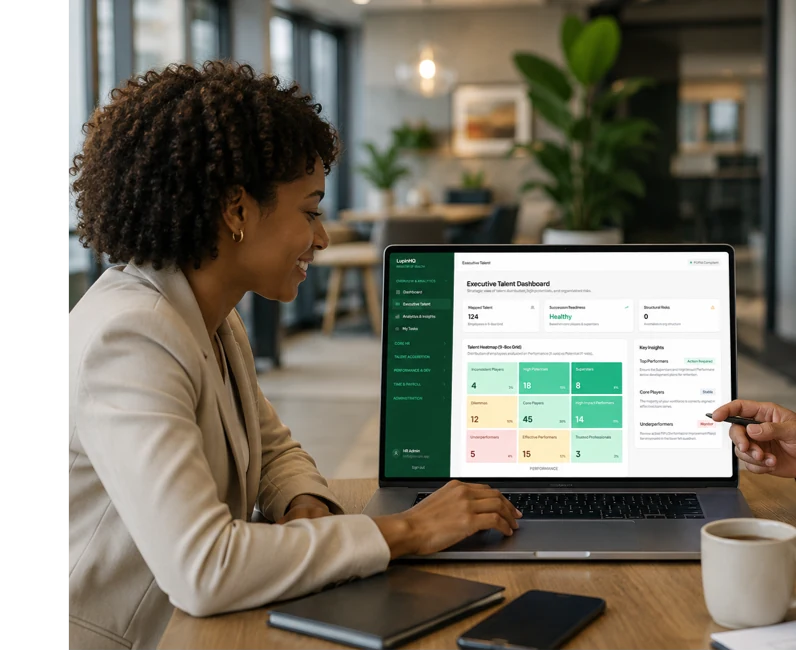
Managed HR services can cover employee-file maintenance, recruitment coordination, onboarding records, HR requests and learning administration. The scope defines the inputs, access boundaries and decisions reserved for HR and management.
Performance-cycle support can coordinate agreements, measure definitions, evidence submissions, review dates and outstanding actions. Public-sector performance administration can be scoped separately around institutional planning and reporting requirements.
The consultant helps maintain consistency and follow-through; the manager and authorised officials remain responsible for assessment, employment decisions and approval. Reporting makes missing records, incomplete submissions and pending reviews visible for action.
Employee records. Maintain the agreed information and document scope.
Recruitment & onboarding. Coordinate candidate and employee administration.
Performance cycles. Follow agreements, evidence and review responsibilities.
Learning & reporting. Track participation and prepare workforce information.
COMPANY PROFILE 2026Combine asset administration with tagging, verification, condition evidence and exception review.
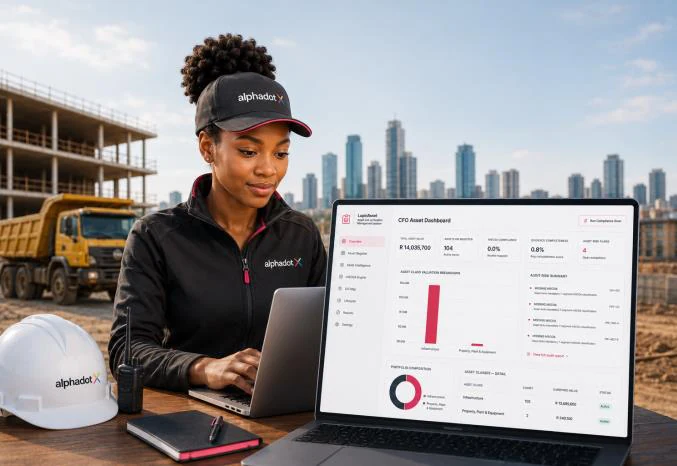
Asset services begin by understanding the estate: sites, asset classes, custodians, locations, source registers and accounting ownership. Data preparation establishes identifiers and the information required for the agreed register.
Field teams can tag, scan, photograph and record location or condition evidence using the selected LupinAsset workflows. Supervisors review completeness, quality and exceptions before information is accepted into the client’s operating records.
Ongoing administration can support custody, transfers, lifecycle records, maintenance coordination and reconciliation preparation. Finance owners approve accounting policy, balances and financial decisions; operational consultants retain and organise the evidence supporting that review.
Register administration. Identifiers, categories, custody and locations.
Field verification. Tags, scans, observations and supporting images.
Exception review. Investigate differences and unresolved records.
Ongoing operation. Transfers, maintenance coordination and reporting.
COMPANY PROFILE 2026Consultants and operational teams can support complaint and service-request administration through LupinServe.
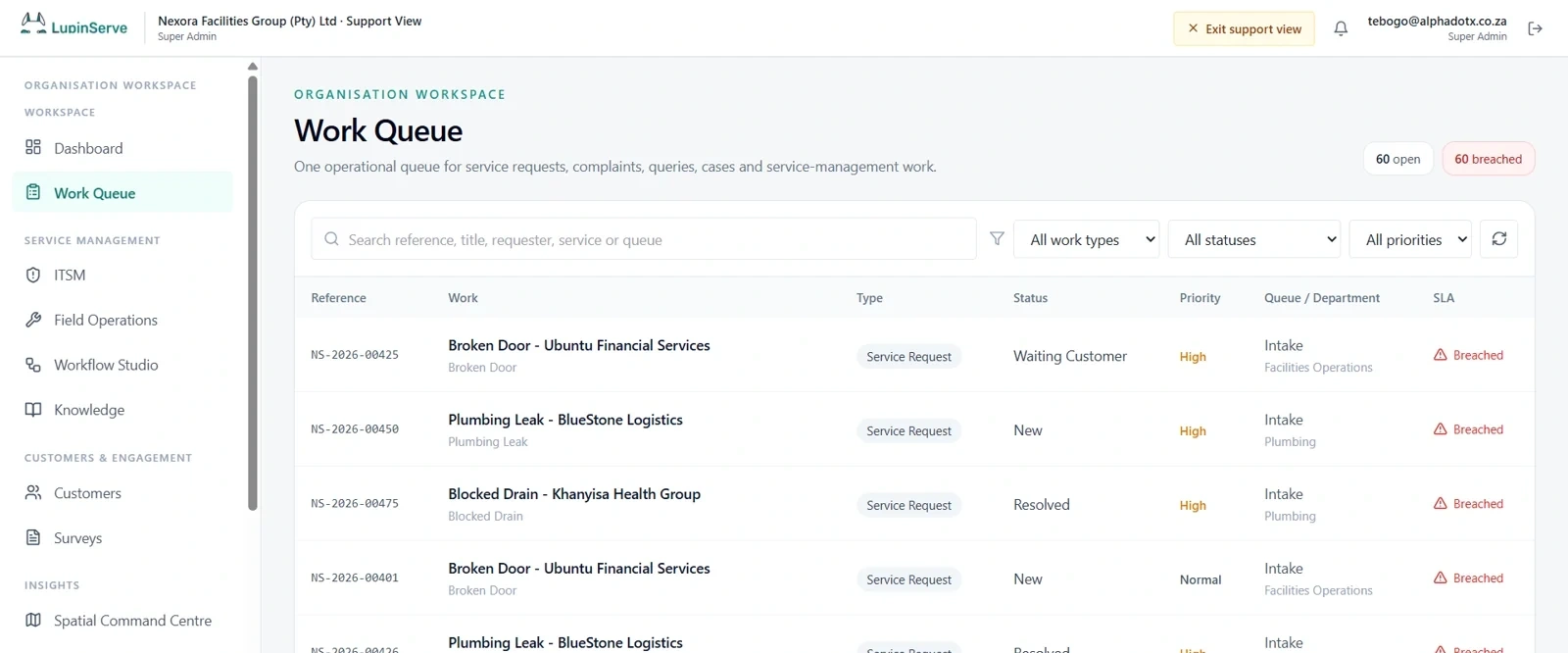
The service model begins with intake categories, channels, departmental responsibilities and escalation rules. Service-desk staff capture the request, check the information and route the work to the agreed responsible team.
Operational support can follow pending activity, coordinate updates, monitor commitments and retain resolution evidence. Where field teams are involved, the process connects dispatch, progress and supporting photographs to the case.
The engagement defines who can close a request, who reviews exceptions and who communicates with the requester. Management reporting supports review of volumes, backlogs, turnaround and repeated issues without replacing the judgement of the client’s service owners.
Intake. Capture, categorise and check information.
Coordination. Route work and follow outstanding activity.
Communication. Provide agreed updates and follow-up.
Review. Check evidence, escalation and closure responsibilities.
COMPANY PROFILE 2026Support the cemetery service while keeping people, graves, rights, cases and interments distinct.

Cemetery BPO services can include historical-register digitisation, records administration, application processing and booking coordination. The work begins with the municipality’s source records, rules, approval roles and cemetery structure.
Staff can organise permit documents, support public enquiries and prepare financial reconciliation information within the agreed LupinCEM workflow. A requested date or submitted application remains subject to municipal verification and approval.
Historical information requires source evidence and careful review. A candidate OCR value, uncertain grave location or disputed right should be flagged for an authorised decision rather than silently promoted into a permanent register. The service supports the municipality’s accountability and the family’s need for clear information.
Historical records. Capture sources and coordinate verification.
Service administration. Applications, bookings and permit records.
Public enquiries. Scoped lookup and staff-assisted follow-up.
Operational reporting. Activity, unresolved work and supporting evidence.
COMPANY PROFILE 2026Support the administrative work behind connectivity packages, vouchers, payments and customer enquiries.
LycanBill-related BPO services can cover subscriber records, voucher administration, reseller coordination, payment reconciliation support and customer-service follow-up. The engagement defines the operator’s package rules and financial responsibilities.
Billing and network access are related but distinct. The operating model identifies which team owns customer administration, payment review, access configuration and technical investigation. Platform permissions should reflect that division.
Routine queues and exception reporting help the operator follow unresolved payments, access questions and reseller activity. Payment-provider, network-equipment and support requirements are assessed during technical discovery; the service scope confirms the applicable interfaces and responsibilities.
Maintain the agreed account information.
Coordinate administration and distribution records.
Prepare reconciliation and investigate exceptions.
Record enquiries and route technical questions.
COMPANY PROFILE 2026Understand the current process before configuring a new way of working.
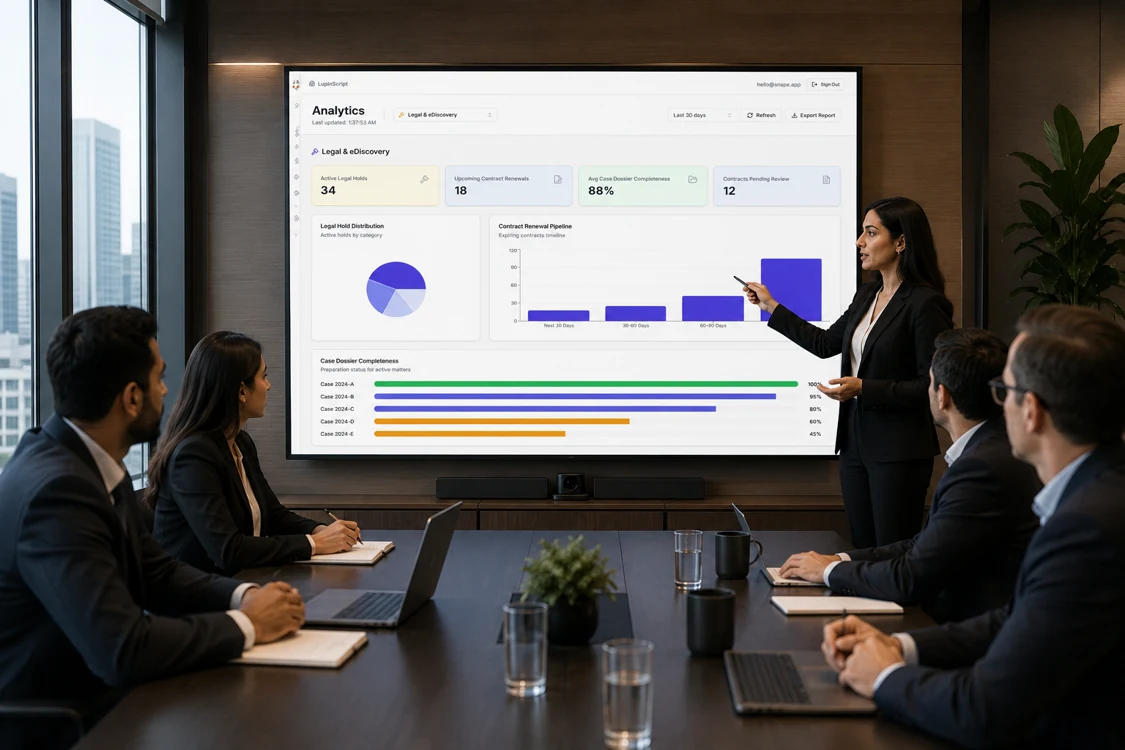
Business analysis identifies the people, inputs, handovers and decisions behind a process. We examine the work that stalls, the information repeated across systems and the reporting needed by management.
The future-state design connects those findings to workflows, platform configuration and operating responsibilities. A phased roadmap can begin with a department or priority process, then expand after the organisation validates the approach.
Training and change support run alongside the technical work. Champions, process owners and users need to understand what changes, where information belongs and how to handle exceptions. Acceptance evaluates the agreed workflow rather than the presence of a screen alone.
Assess. Current-state processes and constraints.
Design. Future-state workflow and ownership.
Enable. Training, champions and user acceptance.
Improve. Review adoption and prioritise refinements.
COMPANY PROFILE 2026Custom applications and interfaces connect specialist requirements with the wider operating environment.
Alphadot X provides custom software development, enterprise and web applications, API design and legacy modernisation. The engagement defines users, workflows, technical requirements and the acceptance scenarios for delivery.
Integration design begins with information ownership. We identify the authoritative system, the direction of exchange, field mappings, access controls and the treatment of failures or conflicting records.
Quality assurance covers the agreed business journeys and interface behaviour. Handover includes the configuration, operating responsibilities and maintenance scope. A standard connector and a bespoke integration are scoped differently, based on the work required in the client environment.
Web platforms and specialist enterprise workflows.
Defined contracts, permissions and mappings.
Preparation, trial loads and reconciliation.
Documentation, ownership and maintenance needs.
COMPANY PROFILE 2026Hosting, monitoring, backup and recovery responsibilities belong in the implementation and service agreement.
Cloud and infrastructure support starts with deployment requirements, access, capacity and the organisation’s operating constraints. The solution design identifies the environments and services required for the selected platform scope.
Operational arrangements can include deployment support, monitoring, performance review, security configuration and backups. Recovery planning defines responsibilities, objectives and the restoration checks required by the client.
Service levels depend on the selected architecture and funded support model. We agree the incident route, maintenance responsibilities and escalation to product specialists. Availability and recovery commitments are confirmed in the deployment-specific agreement rather than assumed from a general company profile.
Environment and access requirements.
Operational health and performance responsibilities.
Backup ownership and restoration verification.
Incident handling and escalation arrangements.
COMPANY PROFILE 2026Our creative and advisory services support organisations communicating clearly and changing how they work.
Branding and digital services can connect positioning, visual identity, websites, communications and sales collateral. The work is shaped around the audience and the business purpose of the material being created.
Business and people advisory can support strategy, HR processes and transformation planning. Consultants help identify improvement priorities and connect them with accountable implementation activities.
These services complement platform delivery. Clear communication helps users understand a new process, while a consistent digital experience helps clients and stakeholders find the information they need. Scope, publishing ownership and future maintenance are agreed with the organisation.
Identity, graphic design and communication assets.
Websites, content platforms and visitor journeys.
Priorities, process improvement and strategy support.
HR processes and organisational change support.
COMPANY PROFILE 2026A practical journey with identifiable outputs and review points.
Discovery establishes the priority processes, stakeholders, systems and data. Design turns those requirements into module selection, workflows, responsibilities, interfaces and an implementation plan.
Delivery includes configuration, data preparation, migration trials and integration work as scoped. Testing and user acceptance evaluate the intended business journeys, including exceptions and role boundaries.
Enablement prepares users and operating owners through training, guidance and handover. Support and improvement then follow the agreed service model. Each stage should produce something the client can review: a brief, design, validated workflow, readiness decision or operating plan.
Requirements, scope and solution blueprint.
Configuration, migration and test evidence.
Training, readiness and named owners.
Operational review and prioritised enhancements.
COMPANY PROFILE 2026A dependable migration requires more than loading the records into a new system.
We assess source formats, volumes, record ownership and quality before defining a migration approach. Paper sources may need preparation and scanning; digital sources may require mapping, metadata enrichment or exception review.
Trial batches provide an opportunity to check counts, relationships, classification and supporting evidence. Records that cannot be matched confidently should remain visible for client review rather than disappear into a successful-load total.
Cutover planning identifies the source freeze, reconciliation responsibilities, acceptance criteria and handling of unresolved items. Source evidence and custodial history help users understand where the new record came from and what was changed during preparation.
Volumes, quality and ownership.
Classification, identifiers and relationships.
Compare counts, values and evidence.
Approve the migration and open-item treatment.
COMPANY PROFILE 2026Acceptance connects a configured capability with the organisation’s actual use case.
The team agrees test scenarios before delivery is judged complete. These cover the key user roles, workflow stages, information changes and outputs required by the engagement.
Exceptions reveal important behaviour: a missing document, duplicate record, changed booking, failed interface or disputed asset location. Permissions and organisation boundaries should be tested alongside the business process.
User acceptance records the result and any outstanding issues. The readiness decision identifies defects, dependencies, workarounds and the owner of the next action. Product demonstrations explain a workflow; acceptance evidence establishes whether the configured solution meets the agreed requirement.
Representative scenarios and expected outputs.
Roles, records and organisation boundaries.
Missing inputs, conflicts and failed exchanges.
Acceptance, open issues and handover decision.
COMPANY PROFILE 2026Users need practical guidance tied to the responsibilities they perform.
Training starts with the workflow: the records officer classifying evidence, the manager reviewing an agreement, the service agent routing a request or the field worker capturing an observation.
Role-based sessions, demonstration journeys and operating guidance help users understand both the routine path and the exception. Administrators need a clear account of configuration responsibilities, while process owners need the reporting and review model.
Adoption continues after initial training. New users, changed procedures and recurring support questions can require refresher guidance. The engagement defines the learning material, client champions and support route needed to keep the organisation using the platform confidently.
Role-based learning. Tasks and decisions relevant to the user.
Administrator enablement. Configuration and access responsibilities.
Process ownership. Reporting, review and escalation.
Continued adoption. Guidance, refreshers and improvement feedback.
COMPANY PROFILE 2026Product support and outsourced client administration are distinct responsibilities within the service model.
Product issues may require escalation to Lupin Technologies, while configuration, administration, training needs and contracted operational work sit within the agreed delivery or managed-service scope.
A support plan identifies the contact route, triage responsibilities, working hours, escalation and reporting. Dedicated staffing, on-site support and customer process administration are specified when the engagement requires them.
Management reviews connect support patterns with improvement priorities. A repeat issue may point to guidance, configuration, data quality or a product change. Response, restoration, resolution and recovery are different commitments and are defined in the applicable agreement.
Describe the issue and its operational effect.
Identify the team responsible for action.
Connect operational and product expertise.
Follow issues and recurring improvement needs.
COMPANY PROFILE 2026Alphadot X connects the selected technology with implementation and operational expertise.
Each Lupin platform has its own purpose. LupinScript supports documents, records and governance. LupinHCM connects people and performance. LupinServe coordinates service requests and operational follow-through.
LupinCEM supports the cemetery service and its permanent records. LupinAsset connects asset administration, verification, maintenance and financial scope. LycanBill brings subscriber, billing and network-access workflows together.
The client selects a coherent scope around its process rather than assuming that every module or connector is included. Cross-product information flows need agreed ownership, access and validation. Alphadot’s services support the work required to put that scope into operation.
LupinScript
LupinHCM
LupinServe
LupinCEM
LupinAsset
LycanBill
COMPANY PROFILE 2026A document, records and governance platform developed by Lupin Technologies.
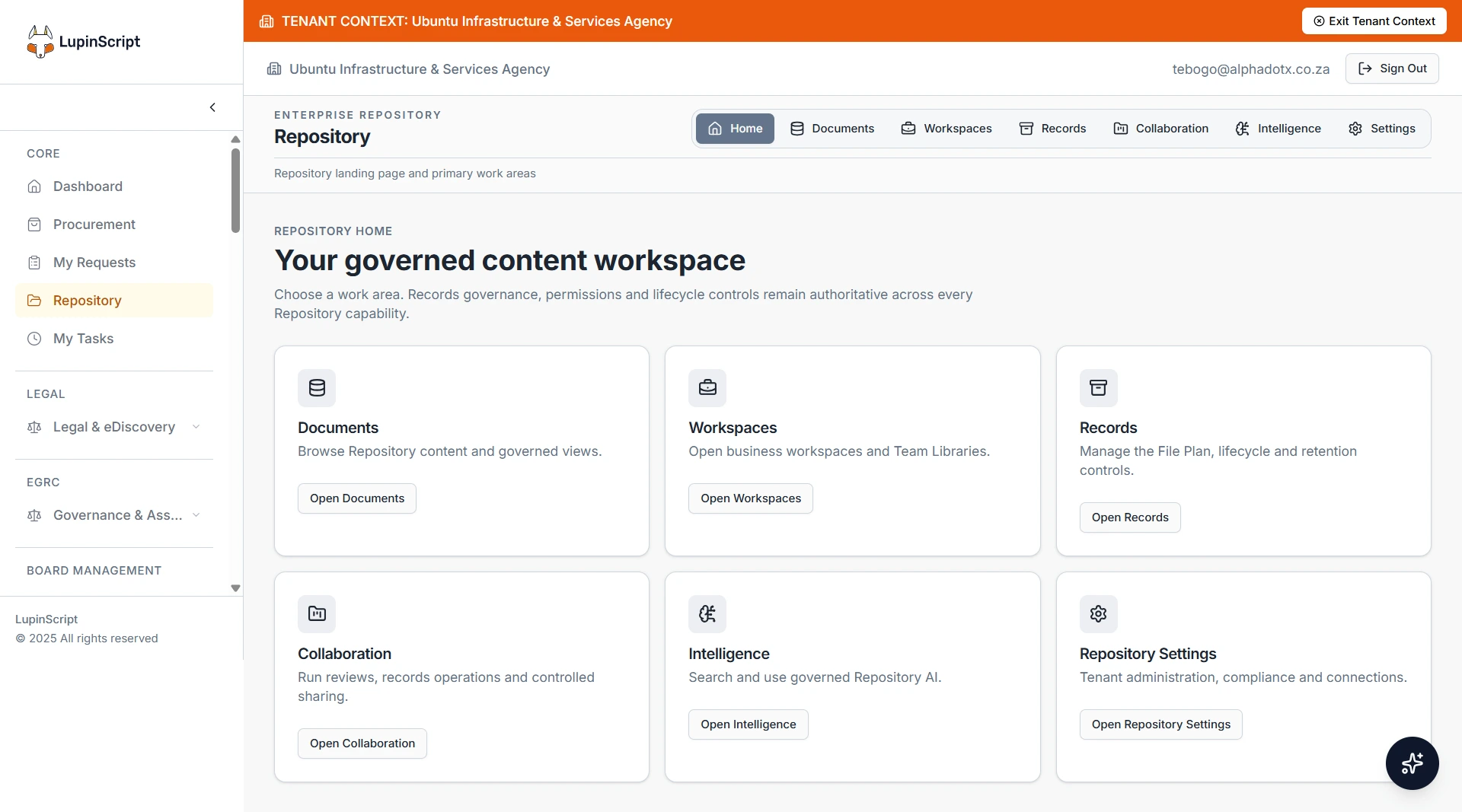
LupinScript connects repository content, metadata, search, tasks and workflows with specialist workspaces. Its scope reaches beyond file storage into the responsibilities behind procurement, contracts, legal records, risk, compliance and internal audit.
Physical and electronic records can be considered together through classification, retention, transfers, custody and authorised disposition. Supporting documents remain part of the evidence behind a review, approval or management action.
Alphadot X can implement the selected modules and provide records operations, consulting, digitisation and administrative support. The organisation defines its file plan, permissions, authorities and acceptance requirements. Optional and beta capabilities are assessed separately within the proposed scope.
COMPANY PROFILE 2026Illustrative journey: a project agreement becomes an operational and retained record.
A team captures an agreement with its business context and supporting documents. Review responsibilities identify the version being considered and the people who need to approve it. Where required, execution follows the scoped signature process.
The approved agreement carries responsibilities: dates, obligations, notice periods and renewal or exit decisions. Contract administration can keep those activities visible while records controls preserve the information the organisation relies on.
If a dispute or audit arises, authorised reviewers need identifiable evidence. Retention and legal preservation follow the organisation’s approved rules. Alphadot consultants can support capture, administration, evidence preparation and follow-up within this journey. This example describes coordinated work, not an automatic trigger between every module.
Organise the agreement and controlled version.
Follow obligations, dates and accountable actions.
Retain the record and its supporting evidence.
COMPANY PROFILE 2026Connect workforce information with the processes and evidence behind people management.
LupinHCM covers employee records, recruitment, performance, learning and employee or manager experiences through selected modules. Its broader catalogue also includes risk, internal audit, compliance and analytics capabilities requiring scope and release validation.
Performance OS connects agreements, KRAs, KPIs, evidence and review responsibilities. Municipal institutional performance and government APP planning are distinct scopes from individual employee agreements and should be designed accordingly.
Alphadot X supports process assessment, configuration, data preparation, training and HR or performance administration. The client’s HR leaders and managers retain employment, assessment and approval decisions. Methodologies, scoring rules, institutional frameworks and interface requirements are confirmed during implementation.
Workforce. Employee information, recruitment and HR processes.
Performance. Measures, evidence, reviews and sign-off.
Institutional scope. Municipal and government planning workflows.
Consulting. People processes, cycle administration and reporting.
COMPANY PROFILE 2026Illustrative journey: an organisational objective becomes individual work and evidence.
The organisation defines its priority and the responsible structure. A manager and employee agree measures, weights, targets and review responsibilities that reflect the approved performance methodology.
During the cycle, the employee records progress and attaches the evidence required for assessment. Managers review submissions, record decisions and follow outstanding items. Reporting should help the reviewer move from a result to the information supporting it.
Alphadot consultants can coordinate agreements, dates, evidence completeness and review follow-up. They can also support configuration and training so people understand their responsibilities. Final assessment and approval stay with the authorised roles. Institutional scorecards and individual agreements are connected only where the agreed modules and implementation support that relationship.
Define measures, responsibilities and review rules.
Capture progress and supporting information.
Assess, moderate and approve as configured.
Coordinate outstanding work and development needs.
COMPANY PROFILE 2026A sector-neutral platform for asset administration, verification, maintenance and assurance.
LupinAsset supports private businesses, enterprise groups, public entities and municipalities. The starting point is the asset estate: identities, locations, custodians, categories and the information needed for operational control.
Selected specialist scope can extend into field verification, maintenance, GIS, asset accounting, tax, municipal finance, reporting and assurance. Module selection depends on the customer’s requirements and validated product readiness rather than the organisation’s sector alone.
Alphadot X can provide register preparation, migration, tagging, field verification, administrative support and training. Accounting, Treasury classification and prescribed outputs require specialist assessment and client approval. The engagement defines evidence quality, reconciliation and acceptance before information is relied upon.
Core administration. Registers, custody, transfers and lifecycle records.
Field & maintenance. Verification, condition evidence and operational work.
Specialist scope. Financial, spatial and assurance requirements.
Delivery services. Preparation, fieldwork, migration and administration.
COMPANY PROFILE 2026Illustrative journey: a multi-site asset-verification engagement.
The client and Alphadot agree the sites, asset population, identifiers and required observations. Source data is prepared and the field team receives a clear procedure for scanning, tagging, condition assessment and photographic evidence.
Supervisors review completeness and exceptions. An asset that cannot be found, a duplicate identifier or a location difference becomes a review item with an owner. The client determines the authorised correction rather than treating every field observation as an approved register change.
Accepted results support register administration and reconciliation preparation. A close-out report identifies coverage, unresolved records and responsibilities for follow-up. The engagement can then move into ongoing administration, maintenance coordination or periodic verification within a new agreed service scope.
Define sites, population and evidence requirements.
Capture the agreed observations in the field.
Resolve differences through authorised owners.
Keep accepted records and follow-up work connected.
COMPANY PROFILE 2026Bring intake, service ownership, escalation and operational work into a connected process.
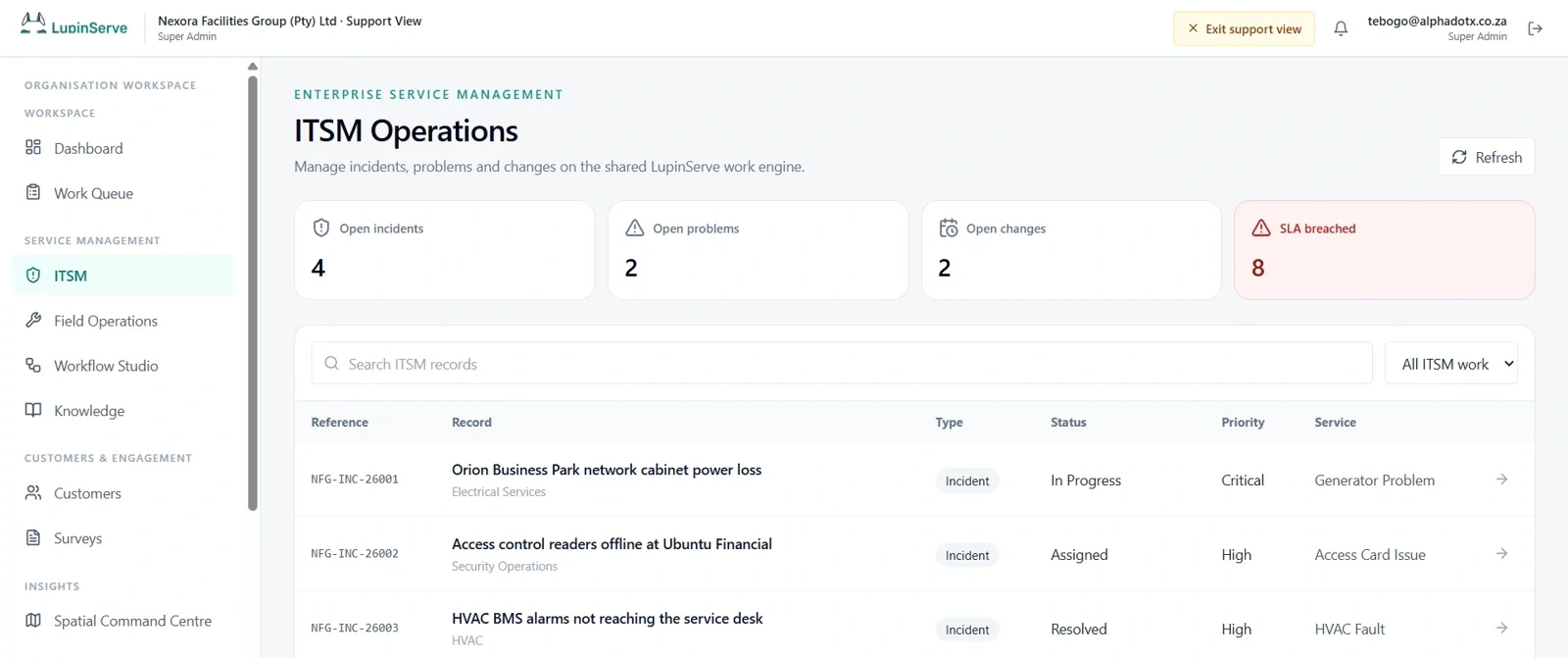
LupinServe supports complaints and service requests for municipalities, public entities, utilities and private service organisations. Categories, queues, responsibilities and turnaround rules reflect the customer’s operating model.
A request can be assigned to the right team, followed through its work stages and reviewed with supporting resolution evidence. Field execution, public portals, channels and integrations are selected and validated within the agreed scope.
Alphadot X can configure the service process, migrate relevant information, train users and provide service-desk administration. Operational consultants help capture, route, communicate and follow outstanding work. Client service owners retain technical decisions, escalations and closure authority as defined by their procedures.
Intake & control. Requests, categories, assignment and case tracking.
Operational work. Tasks, field coordination and evidence.
Management review. Commitments, backlogs and service reporting.
Managed services. Service-desk staffing and administrative support.
COMPANY PROFILE 2026Connect a family’s request with the place, authority, money and permanent history behind the service.
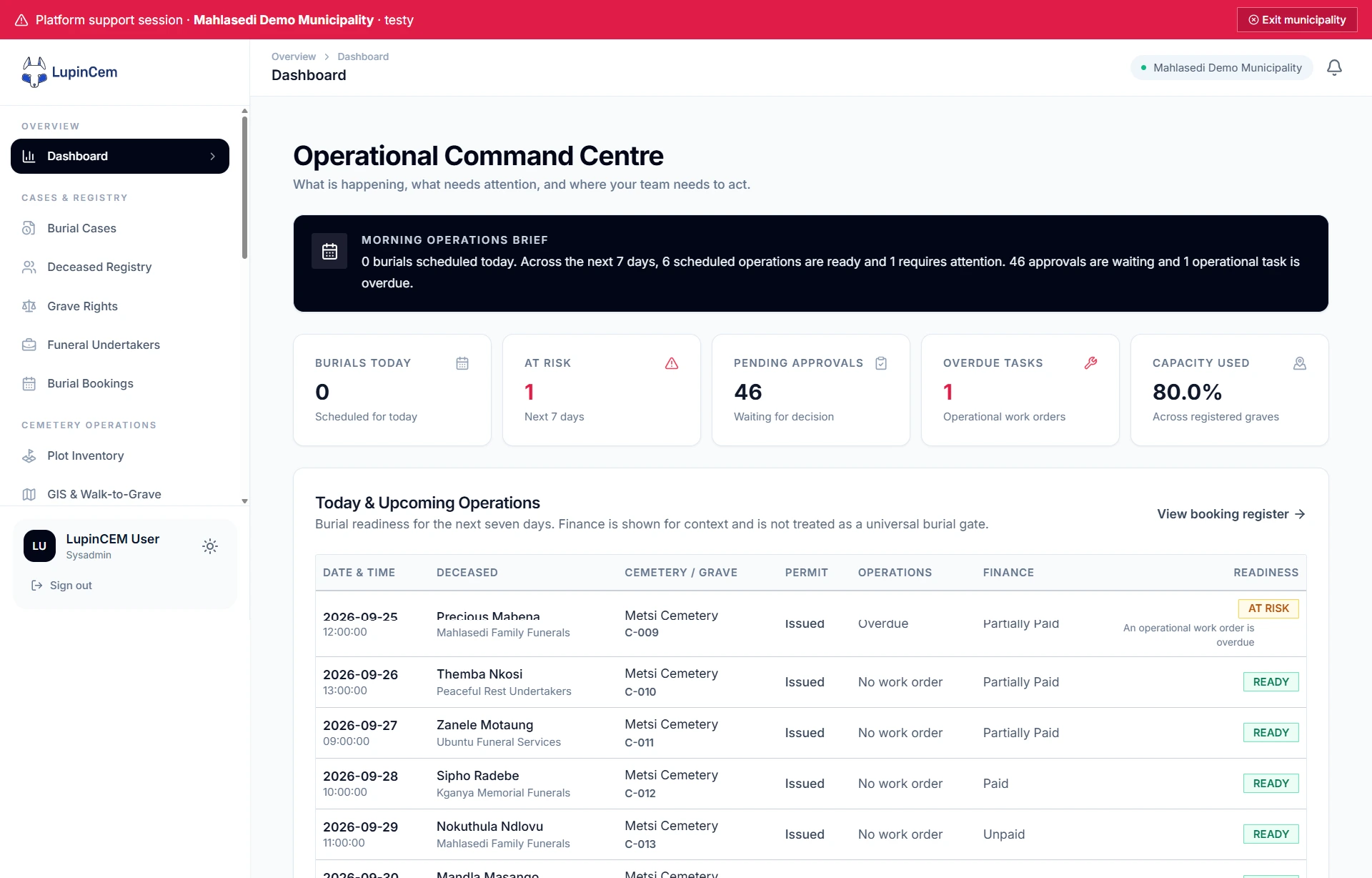
LupinCEM links cemetery administration across person, place, case, authority, money and history. A grave, a grave right and an interment answer different questions and should remain distinguishable even when the service connects them.
The platform’s workspaces cover registers, rights, cases, booking, GIS, field work, permits, finance and historical digitisation. Public journeys use approved information boundaries and do not replace municipal verification or authorisation.
Alphadot X can help prepare records, digitise historical sources, configure the municipal process and support cemetery administration. Uncertain locations, disputed rights and conflicting historical values require evidence and authorised review. Local policy, tariffs, disclosure rules and approvals remain with the municipality.
COMPANY PROFILE 2026Support ISP and connectivity operations through subscriber, package, voucher and billing workflows.
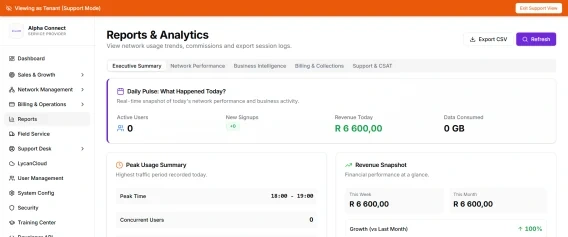
LycanBill brings network-access rules and commercial administration into a coordinated environment. Its product story is organised around LycanCore, LycanFlow and LycanDesk.
LycanCore focuses on authentication, vouchers and access rules. LycanFlow supports session and usage visibility. LycanDesk supports voucher, reseller, subscriber and administrative activity for the operating team.
Alphadot X can assess the operator’s environment, configure the agreed workflows and support billing or customer administration. Network equipment, payment interfaces and deployment dependencies are validated during technical discovery. The operator’s financial, technical and support responsibilities determine the service scope and access model.
LycanCore. Authentication, package and access rules.
LycanFlow. Session and usage oversight.
LycanDesk. Vouchers, resellers and subscriber administration.
Alphadot services. Implementation, integration and operational support.
COMPANY PROFILE 2026Illustrative connections help explain an engagement; the actual information flow is designed and tested with the client.
A service fault can begin in LupinServe and refer to an asset in LupinAsset. The responsible team follows the work, while the organisation agrees how records and supporting evidence connect to LupinScript.
A recruitment or employee process can operate in LupinHCM while approved personnel documents are governed through the scoped records environment. Cemetery administration can connect LupinCEM operational history with document retention or service-request responsibilities.
These are solution-design opportunities, not promises that every exchange is enabled automatically. Each integration needs authoritative identifiers, access rules, ownership, mappings, failure handling and acceptance evidence. Alphadot’s consulting and integration services help establish those requirements.
Connect a request with the physical asset.
Connect an employee process with its evidence.
Connect operational history with recordkeeping.
Define ownership and validate the exchange.
COMPANY PROFILE 2026The same platform can serve different organisations through a carefully defined scope.
Government departments, public entities and municipalities often need structured information, traceable decisions and evidence for institutional review. SETAs and education organisations bring programme, workforce and records responsibilities.
Private enterprise, finance, banking and insurance need controlled information, people processes and consistent administrative handovers. Utilities and infrastructure operators connect requests, assets, locations and maintenance responsibilities.
Cemetery divisions and connectivity businesses have specialist operating models that shape their selected platform and service requirements. We begin with the process and information, then align modules, integrations, consultants and acceptance to the organisation’s priorities.
Records, performance, governance and service delivery.
Information control, workforce and operational processes.
Assets, requests and field evidence.
Cemeteries and connectivity administration.
COMPANY PROFILE 2026Information handling, access and external connections need clear responsibilities from the start.
Discovery identifies sensitive information, user roles, retention needs and approval authorities. The solution scope defines who may view or change a record, what evidence an action retains and which process owner reviews exceptions.
External systems require explicit ownership and exchange rules. Microsoft 365, ERP, GIS, payment and other interfaces are assessed against the available product capability, provider access and customer environment.
Deployment, backup, recovery and service commitments belong in the agreed operating model. Applicable legal, accounting and sector requirements are reviewed against the configured solution; a software capability or demonstration screen alone is not a certification of the organisation’s compliance.
Roles, sensitive records and retention.
Evidence, review and approval responsibilities.
Source of truth, mappings and reconciliation.
Hosting, recovery and support ownership.
COMPANY PROFILE 2026The organisations shown below are represented in the supplied Alphadot X company profile.
Our existing portfolio brings together public institutions, enterprise and service organisations. That variety reinforces the importance of understanding each client’s process, data and operating context before defining a solution.
A useful reference describes the work delivered, the scope and the evidence available to support it. Product demonstrations and illustrative scenarios in this profile explain capabilities; they are separate from a documented client outcome.
For a procurement or discovery discussion, we can identify the relevant experience and supporting material available for the proposed engagement. Project names, outcomes and reference contacts should be shared with appropriate client permissions.
Institutional records and operating requirements.
Digital experiences and business administration.
Relevant scope and available references.



 COMPANY PROFILE 2026
A well-prepared first conversation creates a clearer path into delivery.
Tell us which processes are slowing your organisation down, who owns them and what needs to improve. Share the existing systems, locations, users, data volumes and target timetable relevant to the requirement.
We will discuss the platform and service combination, the information preparation, the required interfaces and the people needed to make the work sustainable. Discovery can distinguish a focused task from a broader implementation or managed-operation programme.
The proposal should explain the deliverables, assumptions, client responsibilities, acceptance criteria and support model. Where BPO is included, it should also define the workload, assigned roles, quality review, reporting and approvals. The result is an engagement the client can understand and review before mobilisation.
Processes, constraints and desired outcomes.
Systems, information, sites and people.
A practical platform, service and delivery scope.
COMPANY PROFILE 2026Discuss a platform, a specialist project, consultant support or an ongoing operational service.
Alphadot X supports organisations through specialist Lupin platforms, implementation, consulting and BPO services. We connect the technology with the people and processes needed for day-to-day operation.
Whether your priority is records, HR and performance, service delivery, cemetery administration, assets, connectivity billing or custom digital development, the starting point is a clear understanding of the work.
Bring your operational and technical owners into the conversation. Together, we can define the responsibilities, information, delivery stages and acceptance process behind the next step.
hello@alphadotx.co.za
+27 87 515 0952
alphadotx.co.za
Pretoria, South Africa